
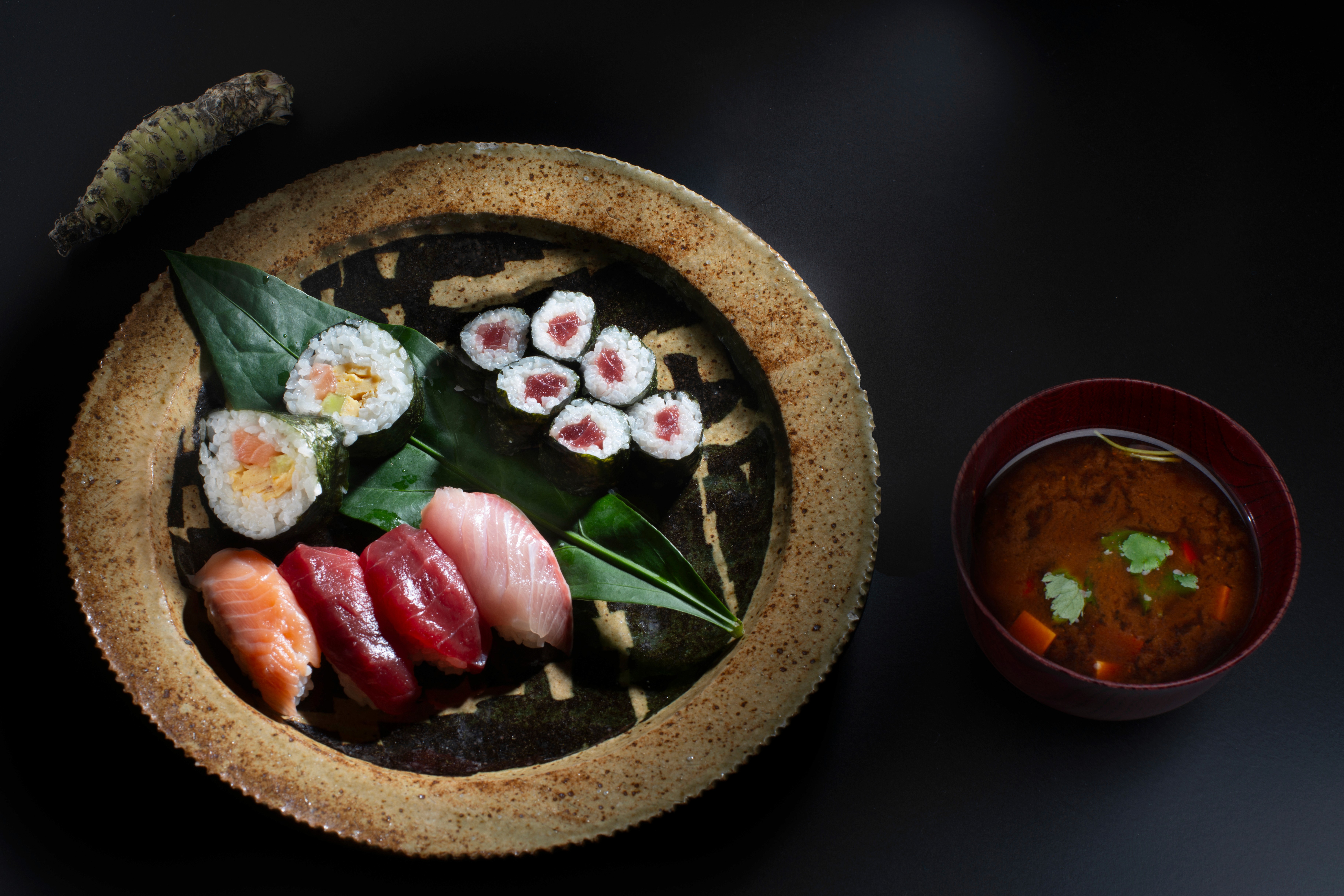
Nigiri vs. Maki Sushi: The Techniques Behind Both (And Why They're Harder Than They Look)
By Yuki Wada | Chef & Cooking Class Instructor in Osaka, Japan
If you've ever tried making sushi at home, you already know the feeling. You follow the steps. You watch the videos. And somehow, the rice ends up too sticky, the roll turns into a triangle, and the nigiri looks like a little lopsided mountain.
You're not doing it wrong because you're bad at cooking. You're doing it wrong because nobody told you the actual reason these techniques work — and where exactly they go wrong.
I've been teaching sushi classes in Osaka for years. I've watched hundreds of students make the same mistakes. And in this post, I'm going to walk you through the real mechanics behind both nigiri and maki — so you finally understand why, not just what.
First: What's the Difference Between Nigiri and Maki?
Let's get the basics out of the way.
Nigiri sushi (握り寿司) is the classic hand-pressed sushi — a small mound of vinegared rice with a slice of fish or topping placed on top. The word nigiri literally means "to grip" or "to squeeze." That squeezing motion is at the heart of the technique.
Maki sushi (巻き寿司) means "rolled sushi." Rice and fillings are placed on a sheet of nori (dried seaweed) and rolled into a cylinder using a bamboo mat. Maki means "to roll." The thin version — the one you'd fill with just cucumber or tuna — is called hosomaki (細巻き), or "thin roll."
Both look simple. Both are deceptively technical. Here's why.
Nigiri: Why "Pressing" Is the Wrong Mental Model
When most people hear "hand-pressed sushi," they imagine pressing down — like you're patting something flat. That instinct is what causes most nigiri to go wrong.
The Technique: Second Joint, Not Fingertips
Here's what I show every student in my class:
Place about 15–18g of sushi rice in your dominant hand. Rest the topping across the second joint of your index and middle fingers — not on your fingertips, and not in your palm. The second joint gives you a natural curve that cradles the topping perfectly and creates the right shape without force.
Now, with your other hand, shape the rice around the topping — not on top of it. You're creating a gentle pocket, not a brick.
The Vinegar Water Trick
Before you touch the rice at all, wet your hands lightly with tezu — a mix of water and a small splash of rice vinegar. This does two things:
Prevents the rice from sticking to your hands
Adds a subtle brightness that complements the flavour of the topping
Don't soak your hands. A light damp is enough. Too much water makes the rice surface wet and changes the texture.
Why You Should Never Press Too Hard
Sushi rice is meant to be airy. Each grain should feel distinct — soft, slightly warm, with a light vinegar note. When you press too hard, you crush the air out of the rice and turn it dense. It tastes heavier than it should. The texture becomes gummy.
The goal is a nigiri that barely holds together. When you eat it, it should fall apart gently in your mouth — not hold its shape like a rice ball.
I always tell my students: if your nigiri looks perfectly neat and firm, you've probably pressed too hard. Real nigiri looks almost a little rough. That's the sign of lightness inside.
Maki (Thin Roll): Why Your Sushi Roll Turns Into a Triangle
This is one of the most common questions I get — and the answer surprises almost everyone.
The Real Culprit: Pressing From the Top
When students roll maki and end up with a triangular cross-section, the instinct is to blame the rolling itself. But 90% of the time, the cause is what happens after the roll is closed: pressing down from the top.
From above, pressing down looks correct. The roll seems to firm up and hold its shape. But what's actually happening is that you're flattening the top while the sides stay round — and you've created a triangle.
The Correct Rolling Sequence
Here's the step-by-step I use in class:
Leave a small gap at the top of the nori. When you spread your rice, leave about 1–1.5cm of nori uncovered at the far edge. This is your sealing strip.
Roll until you reach that gap — then stop. Don't roll all the way over. Stop when the edge of the mat meets the bare nori strip.
Do NOT press from the top. This is the critical moment. Resist the urge.
Pinch the sides gently — 3 times. Use both hands to lightly press the sides of the roll into shape. Left side, right side, centre. Three gentle pinches.
Lift just the mat and roll forward to seal. This final roll closes the nori seam using the moisture from the rice.
Pinch the sides 3 more times. You're done.
That's it. No pressing from the top. The shape comes from the sides, not from above.
Why Nori Matters More Than You Think
One thing students often overlook: the quality and freshness of your nori has a huge impact on rolling. Fresh, crisp nori grips the rice and seals cleanly. Nori that's been sitting open in a humid kitchen gets soft, and soft nori tears and doesn't seal properly.
In Japan, we store opened nori in an airtight container with a desiccant packet. If your nori feels limp, toast it quickly over a gas flame or in a dry pan before using — 10 seconds per side is enough.
Sushi Rice: The Foundation Everything Else Depends On
You can have perfect rolling technique and still end up with mediocre sushi if the rice is off. Here's what actually matters:
Rice Temperature
Sushi rice should be body temperature — around 36–37°C — when you work with it. Too hot and the toppings for nigiri begin to warm and lose their texture. Too cold and the rice becomes stiff and doesn't bind properly.
I prepare my rice and then spread it in a wooden hangiri (or any wide, flat container) to cool evenly. A hangiri absorbs excess moisture and gives the rice a better texture than letting it sit in the pot.
The Vinegar Ratio
There's no single "correct" sushi vinegar ratio — it varies by region, chef, and personal taste. In Osaka, sushi tends to be slightly sweeter than in Tokyo. My base ratio for one cup of dry rice:
2 tablespoons rice vinegar
1 tablespoon sugar
1 teaspoon salt
Mix until the sugar and salt dissolve completely before folding into the rice. Fold — don't stir. Stirring breaks the grains.
The Toppings: Three Techniques That Make the Difference
Making great nigiri isn't just about shaping the rice. The topping — how it's prepared, how it's seasoned, how it's handled — is just as important. In my sushi class, we work with three toppings that each teach a completely different skill.
Dashimaki Tamago (Japanese Rolled Omelette)
Dashimaki tamago (出し巻き卵) is one of those dishes that looks simple and is quietly one of the most technically demanding things in Japanese cooking. It's a rolled omelette made with dashi stock folded in — which gives it a soft, custardy texture that's completely different from a Western omelette.
The challenge is the folding. You're working with a rectangular tamagoyaki pan, building the omelette in layers — pouring a thin layer of egg, letting it just set, rolling it to one side, adding another layer underneath, rolling again. Four or five times. The whole thing takes maybe three minutes, but the timing and heat control have to be precise. Too hot and the egg browns and becomes rubbery. Too cool and the layers don't bind.
For sushi, dashimaki tamago is served slightly sweet, cut into a rectangle, and tied onto the rice with a thin strip of nori. It's one of the few nigiri toppings that doesn't involve raw fish — which makes it a great option for guests who prefer cooked ingredients, and a beautiful contrast on a sushi plate.
Zuke Maguro (Soy-Marinated Tuna)
Zuke (漬け) means "marinated" or "pickled," and zuke maguro is tuna that's been briefly soaked in a mixture of soy sauce, mirin, and sake. It's a technique with a practical origin — before refrigeration, marinating was how sushi chefs preserved fish. Today, it's kept not out of necessity but because the flavour is exceptional.
The marinade only needs 15–30 minutes. Any longer and the fish becomes too salty and the texture changes. The result is tuna with a deeper, more complex flavour than plain raw tuna — a slight sweetness from the mirin, a richness from the soy, and the clean finish of sake. The surface takes on a beautiful sheen.
When you place zuke maguro on nigiri, you'll notice it feels different against the rice. The marinade creates a light glaze that helps the fish sit cleanly on the rice without slipping. It's one of those techniques where you immediately understand why it exists the moment you taste it.
Kombu-Jime Salmon (Kelp-Cured Salmon)
Kombu-jime (昆布締め) is a curing technique where fish is pressed between sheets of kombu (dried kelp) for several hours. The kombu draws out excess moisture from the fish while transferring its natural glutamates — the compounds responsible for umami — into the flesh.
The result is salmon with a firmer texture and a subtle, savoury depth that plain salmon doesn't have. The surface becomes slightly translucent. The flavour is cleaner and more concentrated.
This is one of my favourite techniques to teach because it makes the concept of umami tangible. Students eat the salmon before and after the kombu-jime process and taste the difference directly. It's the kind of thing you can't fully understand from reading about it — you have to taste it side by side.
Kombu-jime salmon also refrigerates beautifully, which makes it practical for home cooking. Once you've learned the technique, you can prepare it the night before and have it ready for a dinner party.
What You Can Make at Home vs. What You Learn in Person
I want to be honest with you: a lot of sushi technique can be learned from videos and blog posts. The concepts I've described above are real, and if you practice them carefully, you'll improve.
But there's a layer of this that's genuinely hard to get from a screen.
The pressure required for nigiri — how much is "gently" and how much is "too much" — is a tactile judgment that's hard to calibrate without someone watching your hands and giving you feedback. Same with the rolling motion for maki: the speed, the tension in the mat, the moment to stop — these are things you feel before you see.
In my classes in Osaka, I work with a maximum of six students at a time. That means I can watch every person's hands, adjust their grip, and explain in the moment why something isn't working. By the end of a two-hour session, every student leaves having successfully made both nigiri and maki — and understanding why each step matters.
If you're visiting Osaka, I'd love to have you in my kitchen.
What to Expect in a Sushi Class at Yuki Chef
My sushi classes run for about two hours in my home kitchen in Higashi-Osaka. Here's what we cover:
Sushi rice preparation — the vinegar mix, the folding technique, getting the temperature right
Nigiri shaping — the second joint technique, tezu, how to handle fish
Hosomaki rolling — nori preparation, filling placement, the 3-pinch method
Dashimaki tamago — the layered rolled omelette with dashi, served as a nigiri topping
Zuke maguro — soy-marinated tuna, a classic Edo-period preservation technique
Kombu-jime salmon — kelp-cured salmon, a hands-on introduction to umami
Miso soup — dashi from scratch, how to choose and dissolve miso without boiling it
Eating everything we make together at the end
Classes are small — a maximum of six people — which means personalized attention throughout. I've taught students from all over the world: beginners who have never touched sushi rice, experienced home cooks who want to refine their technique, and everything in between.
I also offer a gluten-free sushi class for guests with dietary restrictions — a class I'm particularly proud of, since it took years of testing to develop reliable gluten-free versions of every element.
Ready to Make Sushi in Osaka?
If this post has you curious about what hands-on sushi making actually feels like — come and find out.
👉 Book my sushi class at yukichef.com/classes/sushi-miso-soup
Classes are available most days. Spots fill up quickly, especially during peak travel seasons, so I recommend booking at least a few days in advance.
And if you want to practice at home before (or after) your visit, both videos I referenced in this post are on my YouTube channel — search Yuki Wada chef to find them.
Yuki Wada is a cooking class instructor based in Osaka, Japan. She holds a Master's degree in Creative Arts, has trained in Michelin Bib Gourmand-level kitchens, and holds sake qualifications. She teaches sushi, tempura, ramen, and washoku to small groups of international visitors in her home kitchen in Higashi-Osaka.
Instructions
Step 1